


- University
- Academic
- Schools/Vocational Schools
- Vocational School of Justice
- Vocational School
- Vocational School
- Department of Banking and Insurance (Turkish)
- Department of Computer Programming (Turkish)
- Department of Foreign Trade (Turkish)
- Department of Graphic Design (Turkish)
- Department of Interior Design (Turkish)
- Department of Construction Technology (Turkish)
- Department of Occupational Health and Safety (Turkish)
- Department of Media and Communication (Turkish)
- Department of Architectural Restoration (Turkish)
- Department of Radio and Tv Programming (Turkish)
- Department of Civil Aviation Cabin Services (Turkish)
- Department of Civil Aviation Transportation Management (Turkish)
- Department of Tourism and Hotel Management (Turkish)
- Department of Applied English Translation
- Vocational School Of Health Services
- Vocational School Of Health Services
- Department of Child Development (Turkish)
- Department of Physiotherapy (Turkish)
- Department of Paramedic (Turkish)
- Department of Opticianry (Turkish)
- Department of Medical Documentation and Secreteriat (Turkish)
- Department of Medical Imaging Techniques (Turkish)
- Department of Medical Laboratory Techniques (Turkish)
- Department of Elderly Care (Turkish)
- School of Applied Management Sciences
- School of Foreign Languages
- Faculties
- Faculty of Arts and Sciences
- Faculty of Fine Arts and Design
- Faculty of Law
- Faculty of Communication
- Faculty of Business
- Faculty of Engineering
- Faculty of Engineering
- Department of Computer Engineering
- Department of Biomedical Engineering
- Department of Electrical and Electronics Engineering
- Department of Industrial Engineering
- Department of Food Engineering
- Department of Genetics and Bioengineering
- Department of Aerospace Engineering
- Department of Civil Engineering
- Department of Mechanical Engineering
- Department of Mechatronics Engineering
- Department of Software Engineering
- Faculty of Health Sciences
- Medicine
- Graduate School
- Common Courses
- Schools/Vocational Schools
- Research
- Research Centers
- Library
- Smart Campus
- Technology Transfer Office
- İzmir Sciencepark
- Continuous Education Center (EKOSEM)
- Children's University
- Ethics Committee
- Teaching and Learning Center (EKOEĞİTİM)
- Psychology Application and Research Center
- Researcher Training Coordinatorship
- Research Collaborations And Innovation Coordinatorship
- Campus
- INTERNATIONAL
- Contact
- 25TH YEAR
Department of Political Science and International Relations
GEAR 211 | Course Introduction and Application Information
| Course Name |
Communication, Literature and Philosophy
|
|
Code
|
Semester
|
Theory
(hour/week) |
Application/Lab
(hour/week) |
Local Credits
|
ECTS
|
|
GEAR 211
|
Fall/Spring
|
3
|
0
|
3
|
5
|
| Prerequisites |
None
|
|||||
| Course Language |
English
|
|||||
| Course Type |
Service Course
|
|||||
| Course Level |
First Cycle
|
|||||
| Mode of Delivery | - | |||||
| Teaching Methods and Techniques of the Course | - | |||||
| National Occupation Classification | - | |||||
| Course Coordinator | ||||||
| Course Lecturer(s) | ||||||
| Assistant(s) | - | |||||
| Course Objectives | This module aims to introduce students to analytic thinking and philosophizing via short readings and analysis of literary and media texts. |
| Learning Outcomes |
The students who succeeded in this course;
|
| Course Description | This course will examine Western philosophy in relation to literature, art, and culture and communication fields in general. |
| Related Sustainable Development Goals |
|
|
|
Core Courses | |
| Major Area Courses | ||
| Supportive Courses | ||
| Media and Management Skills Courses | ||
| Transferable Skill Courses |
WEEKLY SUBJECTS AND RELATED PREPARATION STUDIES
| Week | Subjects | Related Preparation |
| 1 | Introduction, getting to know each other, presentation of course learning outcomes and evaluation criteria | |
| 2 | What is philosophy? Why read literature? | Nigel Warburton – Philosophy: The Basics, Introduction Mario Vargas Llosa – Why literature? In-class close reading exercise: Ray Bradbury – The Veldt |
| 3 | Reading in the Digital Age | Umberto Eco - From Internet to Gutenberg Nicholas Carr – Is Google Making Us Stupid? In-class close reading exercise: Ernest Hemingway – Cat in the Rain |
| 4 | What is close reading? | Francine Prose — Reading Like a Writer, Chapter 1: Close Reading In-class close reading exercise: Novel and Movie Nancy H. Kleinbaum – Dead Poets Society, excerpts Dead Poets Society (1989) dir. Peter Weir, selected scenes |
| 5 | What is Enlightenment? | Immanuel Kant – What is Enlightenment? Shirley Jackson – The Lottery |
| 6 | Alienation | Nigel Warburton - A Little History of Philosophy, Chapter 27: Workers of the World Unite Karl Marx – Estranged Labour John Updike – A&P |
| 7 | Reading a Movie | In-class close film reading exercise: Fight Club (1999) dir. David Fincher, selected scenes |
| 8 | Midterm Exam | 7-15 November 2026 |
| 9 | Not to Work | Paul Lafargue - The Right to Be Lazy Bertrand Russell - In Praise of Idleness Spongebob Squarepants selected episodes |
| 10 | Boredom | Georg Simmel – The Metropolis and Mental Life American Psycho, dir. Mary Harron |
| 11 | Unconscious | Nigel Warburton - A little history of philosophy, Chapter 30: Thoughts in Disguise Sigmund Freud - The Psychopathology of Everyday Life, Chapter 5: Slips of the Tongue |
| 12 | The Traces of Unconscious | Kate Chopin – The Story of an Hour Fight Club (1999) dir. David Fincher |
| 13 | Freedom | Jean-Paul Sartre - Existentialism is a Humanism Groundhog Day, dir. Harold Ramis |
| 14 | Humor | Henry Bergson – Laughter, excerpts Simon Critchley — On Humour, excerpts Selected movie, serie and stand-up scenes, tba |
| 15 | Review of the Semester | |
| 16 | Final Exam | 4-13 January 2027 |
| Course Notes/Textbooks | *All course readings are available at the University Library and as open sources. |
| Suggested Readings/Materials |
EVALUATION SYSTEM
| Semester Activities | Number | Weigthing |
| Participation |
1
|
15
|
| Laboratory / Application | ||
| Field Work | ||
| Quizzes / Studio Critiques |
1
|
15
|
| Portfolio | ||
| Homework / Assignments | ||
| Presentation / Jury | ||
| Project | ||
| Seminar / Workshop | ||
| Oral Exams | ||
| Midterm |
1
|
30
|
| Final Exam |
1
|
40
|
| Total |
| Weighting of Semester Activities on the Final Grade |
3
|
100
|
| Weighting of End-of-Semester Activities on the Final Grade | ||
| Total |
ECTS / WORKLOAD TABLE
| Semester Activities | Number | Duration (Hours) | Workload |
|---|---|---|---|
| Theoretical Course Hours (Including exam week: 16 x total hours) |
16
|
3
|
48
|
| Laboratory / Application Hours |
16
|
0
|
|
| Study Hours Out of Class |
16
|
3
|
48
|
| Field Work |
0
|
||
| Quizzes / Studio Critiques |
1
|
14
|
14
|
| Portfolio |
0
|
||
| Homework / Assignments |
0
|
||
| Presentation / Jury |
0
|
||
| Project |
0
|
||
| Seminar / Workshop |
0
|
||
| Oral Exam |
0
|
||
| Midterms |
1
|
15
|
15
|
| Final Exam |
1
|
25
|
25
|
| Total |
150
|
COURSE LEARNING OUTCOMES AND PROGRAM QUALIFICATIONS RELATIONSHIP
|
#
|
Program Competencies/Outcomes |
* Contribution Level
|
|||||
|
1
|
2
|
3
|
4
|
5
|
|||
| 1 |
To be able to use the theoretical and practical knowledge acquired in the areas of Political Science and International Relations. |
-
|
-
|
-
|
-
|
-
|
|
| 2 |
To be able to have the basic knowledge of, and make use of other disciplines which contribute to the areas of Political Science and International Relations. |
-
|
-
|
-
|
-
|
-
|
|
| 3 |
To be able to distinguish the differences between classical and contemporary theories and to assess their relationship. |
-
|
-
|
-
|
-
|
-
|
|
| 4 |
To be able to recognize regional and global issues, and develop sustainable solutions based on research. |
-
|
-
|
-
|
-
|
-
|
|
| 5 |
To be able to assess the acquired knowledge and skills in the areas of Political Science and International Relations critically. |
-
|
-
|
-
|
-
|
-
|
|
| 6 |
To be able to transfer ideas and proposals on issues in the areas of Political Science and International Relations to other people and institutions verbally and in writing. |
-
|
-
|
-
|
-
|
-
|
|
| 7 |
To be able to identify the historical continuity and changes observed in the relations between the actors and institutions of national and international politics. |
-
|
-
|
-
|
-
|
-
|
|
| 8 |
To be able to examine concepts, theories, and developments with scientific methods in the areas of Political Science and International Relations. |
-
|
-
|
-
|
-
|
-
|
|
| 9 |
To be able to take responsibility as an individual and as a team member. |
-
|
-
|
-
|
-
|
-
|
|
| 10 |
To be able to act in accordance with the scientific and ethical values in studies related to Political Science and International Relations. |
-
|
-
|
-
|
-
|
-
|
|
| 11 |
To be able to collect data in the areas of Political Science and International Relations and communicate with colleagues in a foreign language ("European Language Portfolio Global Scale", Level B1). |
-
|
-
|
-
|
-
|
-
|
|
| 12 |
To be able to speak a second foreign language at a medium level of fluency efficiently. |
-
|
-
|
-
|
-
|
-
|
|
| 13 |
To be able to relate the knowledge accumulated throughout human history to their field of experience. |
-
|
-
|
-
|
-
|
-
|
|
*1 Lowest, 2 Low, 3 Average, 4 High, 5 Highest
NEWSALL NEWS


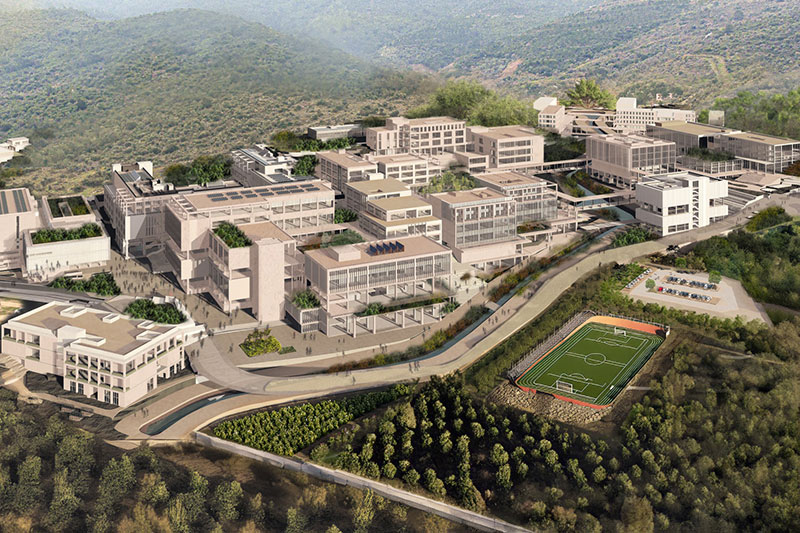
IZMIR UNIVERSITY OF ECONOMICS GÜZELBAHÇE CAMPUS
DetailsGLOBAL CAREER
As Izmir University of Economics transforms into a world-class university, it also raises successful young people with global competence.
More..CONTRIBUTION TO SCIENCE
Izmir University of Economics produces qualified knowledge and competent technologies.
More..VALUING PEOPLE
Izmir University of Economics sees producing social benefit as its reason for existence.
More..
You are one step ahead with your graduate education at Izmir University of Economics.