

Logo
My IEU Logo
TR
University
President
Rector
History
Board of Trustees
Administrative Staff
Rectorate
Mission
Scholarship
Collaborations
Quality Structuring at IUE
Bylaws / Regulations
Awards
Protection of Personal Data
Gender Equality Plan
Principles and Policies
Academic
Schools
Faculties
Graduate School
Common Courses
  • Vocational School of Justice
  • Vocational School
  • Vocational School of Health Services
  • School of Applied Management Sciences
  • School of Foreign Languages
  • Faculty of Arts and Sciences
  • Faculty of Fine Arts and Design
  • Faculty of Law
  • Faculty of Communication
  • Faculty of Business
  • Faculty of Engineering
  • Faculty of Health Sciences
  • Faculty of Medicine
  • Graduate School
  • Master's Programs in Economics
  • Master's Programs in Law
  • Master's Programs in Communication
  • Graduate Programs in Business
  • Master's Programs in Logistics
  • Graduate Programs in Mathematics
  • Master's Programs in Architecture
  • Graduate Programs in Engineering
  • Graduate Programs in Psychology
  • Health Field
  • Political Science and International Relations Field
  • Master's Programs in Sustainable Energy
  • Graduate Programs in Design Studies
  • Graduate Programs in Foreign Languages
Research
Research Centers
Library
Smart Campus
Technology Transfer Office
İzmir Science Park
Continuous Education Center (EKOSEM)
Children's University
Researcher Training Coordinatorship
Ethics Committee
Teaching and Learning Center (EKOEĞİTİM)
Psychology Application and Research Center
Research Collaborations And Innovation Coordinatorship
Campus
Life at IUE
İzmir
Library
Dormitories and Accommodation
Cafes and Restaurants
Student Clubs
IUE Publisher
Disability Support Center
Health and Counseling Services
INTERNATIONAL
Contact
İzmir Ekonomi Üniversitesi
  • University
    • President
    • Rector
    • History
    • Board of Trustees
    • Administrative Staff
    • Rectorate
    • Mission
    • Scholarship
    • Collabrations
    • Quality Structuring at IUE
    • Bylaws and Regulations
    • Rewards
    • Protection of Personal Data
    • Gender Equality Plan
    • Principles and Policies
  • Academic
    • Schools/Vocational Schools
      • Vocational School of Justice
        • Vocational School of Justice
        • Department of Justice (Turkish)
        • Department of Legal Office Management and Secretariat
      • Vocational School
        • Vocational School
        • Department of Banking and Insurance (Turkish)
        • Department of Computer Programming (Turkish)
        • Department of Foreign Trade (Turkish)
        • Department of Graphic Design (Turkish)
        • Department of Interior Design (Turkish)
        • Department of Construction Technology (Turkish)
        • Department of Occupational Health and Safety (Turkish)
        • Department of Media and Communication (Turkish)
        • Department of Architectural Restoration (Turkish)
        • Department of Radio and Tv Programming (Turkish)
        • Department of Civil Aviation Cabin Services (Turkish)
        • Department of Civil Aviation Transportation Management (Turkish)
        • Department of Tourism and Hotel Management (Turkish)
        • Department of Applied English Translation
      • Vocational School Of Health Services
        • Vocational School Of Health Services
        • Department of Child Development (Turkish)
        • Department of Physiotherapy (Turkish)
        • Department of Paramedic (Turkish)
        • Department of Opticianry (Turkish)
        • Department of Medical Documentation and Secreteriat (Turkish)
        • Department of Medical Imaging Techniques (Turkish)
        • Department of Medical Laboratory Techniques (Turkish)
        • Department of Elderly Care (Turkish)
      • School of Applied Management Sciences
        • School of Applied Management Sciences
        • Gastronomy and Culinary Arts Program
      • School of Foreign Languages
    • Faculties
      • Faculty of Arts and Sciences
        • Faculty of Arts and Sciences
        • Department of Physics
        • Department of Mathematics
        • Department of English Translation and Interpreting
        • Department of Psychology
        • Department of Sociology
      • Faculty of Fine Arts and Design
        • Faculty of Fine Arts and Design
        • Department of Industrial Design
        • Department of Visual Communication Design
        • Department of Interior Architecture and Environmental Design
        • Department of Architecture
        • Department of Textile and Fashion Design
      • Faculty of Law
      • Faculty of Communication
        • Faculty of Communication
        • Department of Public Relations and Advertising
        • Department of Cinema and Digital Media
        • Department of New Media and Communication
      • Faculty of Business
        • Faculty of Business
        • Department of Economics
        • Department of Business Administration
        • Department of Logistics Management
        • Accounting and Auditing Program
        • Department of Political Science and International Relations
        • Department of International Trade and Finance
      • Faculty of Engineering
        • Faculty of Engineering
        • Department of Computer Engineering
        • Department of Biomedical Engineering
        • Department of Electrical and Electronics Engineering
        • Department of Industrial Engineering
        • Department of Food Engineering
        • Department of Genetics and Bioengineering
        • Department of Aerospace Engineering
        • Department of Civil Engineering
        • Department of Mechanical Engineering
        • Department of Mechatronics Engineering
        • Department of Software Engineering
      • Faculty of Health Sciences
        • Faculty of Health Sciences
        • Department of Physiotherapy and Rehabilitation
        • Department of Nursing
        • Department of Health Management
        • Department of Nutrition and Dietetics
      • Medicine
    • Graduate School
    • Common Courses
  • Research
    • Research Centers
    • Library
    • Smart Campus
    • Technology Transfer Office
    • İzmir Sciencepark
    • Continuous Education Center (EKOSEM)
    • Children's University
    • Ethics Committee
    • Teaching and Learning Center (EKOEĞİTİM)
    • Psychology Application and Research Center
    • Researcher Training Coordinatorship
    • Research Collaborations And Innovation Coordinatorship
  • Campus
    • Life at IUE
    • İzmir
    • Library
    • Health and Counseling Services
    • Dormitories and Accommodation
    • Cafes and Restaurants
    • Student Clubs
    • Disability Support Center
    • IUE Publisher
  • INTERNATIONAL
  • Contact
  • TÜRKÇE

  • Prospective Student | Student | Alumni

      Search Results...

      FACULTY OF BUSINESS

      Department of Political Science and International Relations

      Menu
      • Main Page
      • About Us
      • Academic
        • Academic Calendar
        • Academic Staff
        • Academic Publications
      • Education
        • Undergraduate
          • Vertical Transfer
          • Curriculum
          • General Education Courses
          • Exam Regulations, Assesment and Grading
          • Courses
          • Erasmus
          • Double Major and Minor Programs
          • Internship
          • Graduation Requirements
          • TYYÇ - Program Yeterlilikleri İlişkisi
        • Graduate
          • Master's Degree
          • Phd Program
          • Phd Qualifying Exam
          • Our Phd Students
      • Scientific Activities
        • Theses
        • Awards
        • Projects
        • Research Centers
      • Prospective Students
        • About Us
        • Examples Of Our Graduates' Career Paths
        • Students Speaking
        • Graduates Speaking
      • All News
      • Announcements
      • Contact

      PSIR 463 | Course Introduction and Application Information

      Course Name
      Science and Technology Studies in International Relations
      Code
      Semester
      Theory
      (hour/week)
      Application/Lab
      (hour/week)
      Local Credits
      ECTS
      PSIR 463
      Fall/Spring
      3
      0
      3
      6

      Prerequisites
      None
      Course Language
      English
      Course Type
      Elective
      Course Level
      First Cycle
      Mode of Delivery -
      Teaching Methods and Techniques of the Course Discussion
      Case Study
      Lecture / Presentation
      National Occupation Classification -
      Course Coordinator -
      Course Lecturer(s)
      • Doç. Dr. SITKI EGELİ
      Assistant(s)
      • Arş.Gör.Dr. Nil DİKMENGİL
      Course Objectives The purpose of this course is to enable students to identify and analyze the influence of scientific innovation and technological progress on international relations. A parallel objective is to make students appreciate the importance of acquiring a basic understanding of natural science and technology matters while dealing with international relations and social sciences.
      Learning Outcomes

      The students who succeeded in this course;

      • Describe past and present impact of scientific and technological progress on international relations,
      • Apprehend the intrinsic link and complex interactions between social and natural sciences,
      • Identify those technology areas with stronger and more direct influence on the dynamics, conduct and the future trajectory of international relations,
      • Compare the technological capacities and agendas of leading states and non-state actors,
      • Identify those international actors that are more likely to benefit or else suffer as a result of scientific and technological breakthroughs,
      • Assess new risks, challenges, and ambiguities to be created by technological progress for the international system and international relations.
      Course Description This course is designed to introduce the students to the Science and Technology Studies (STS) and apply this relatively new issue area to the study of international relations. A main objective will be to help students identify the constant and innate relationship between scientific knowledge and technological progress on the one hand, and the trajectory and the conduct of international relations on the other. Due tribute would be paid to assessing the systematic efforts by social scientists to probe how scientific discovery and its technological applications link up with socio-political, political and geopolitical developments, ethics, law, culture, etc. within the context of international relations. By exploring and scrutinizing the ever accelerating technological progress in such domains as artificial intelligence, autonomous systems, cyber security, genetical engineering, quantum technologies, and exploitation and colonization of outer space, the students will be developing a more comprehensive and multi-dimensional understanding and appreciation of the role and the effects of scientific and technological developments on the past, current and future shape and dynamics of international relations. New and multi-layered and multi-faceted perspectives gained by completing this course are expected to equip the students with the instruments to evaluate—analytically—the benefits and the risks, the dangers and the promises, of notable advances in science and technology with respect to international relations.
      Related Sustainable Development Goals


      Course Category

      Core Courses
      Major Area Courses
      X
      Supportive Courses
      Media and Management Skills Courses
      Transferable Skill Courses


      WEEKLY SUBJECTS AND RELATED PREPARATION STUDIES

      Week Subjects Related Preparation
      1 Introduction and ground rules of the course
      2 Science and Technology Studies (STS), Emerging Disruptive Technologies (EDT). Eric Schmidt, “Innovation Power,” Foreign Affairs, March 2023, link: https://www.foreignaffairs.com/united-states/eric-schmidt-innovation-power-technology-geopolitics; Stefan Fritsch, “Technological Ambivalence and International Relations,” e-ir.info, February 2016, link: https://www.e-ir.info/2016/02/24/technological-ambivalence-and-international-relations/.
      3 Competition, conflict, technology – historical background Martin Van Creveld, Technology and War, (1991); Thomas A. Keaney and Eliot A. Cohen, A Revolution in Warfare? (1995).
      4 Competition, conflict, technology – contemporary developments Nina Tannenwald, “The Vanishing Nuclear Taboo?” Foreign Affairs, October 2018, link: https://www.foreignaffairs.com/articles/world/2018-10-15/vanishing-nuclear-taboo; Andrew F. Krepinewich, Jr. “The New Nuclear Age,” Foreign Affairs, May/June 2022, link: https://www.foreignaffairs.com/articles/china/2022-04-19/new-nuclear-age.
      5 Nuclear weapons and means of delivery Nina Tannenwald, “The Vanishing Nuclear Taboo?” Foreign Affairs, October 2018, link: https://www.foreignaffairs.com/articles/world/2018-10-15/vanishing-nuclear-taboo; Andrew F. Krepinewich, Jr. “The New Nuclear Age,” Foreign Affairs, May/June 2022, link: https://www.foreignaffairs.com/articles/china/2022-04-19/new-nuclear-age.
      6 Missile defense Jeffrey Lewis, “Slowing a New Arms Race Means Compromising on Missile Defense,” Foreign Affairs, February 2021, link: https://www.foreignaffairs.com/articles/china/2021-02-22/nuclear-option; George Lewis and Frank von Hippel, “Limitations on ballistic missile defense – past and possibly future,” Bulletin of the Atomic Scientists, July 2018, link: https://thebulletin.org/2018/06/limitations-on-ballistic-missile-defense-past-and-possibly-future/.
      7 Uncrewed vehicles Micah Zenko and Sarah Kreps, “How Drones Make War Too Easy,” Defense One, October 2015, https://www.defenseone.com/voices/sarah-kreps/11671/; Michael Rogoway, “Drone Warfare’s Terrifying AI-Enabled Next Generation,” The War Zone, February 2024, https://www.twz.com/news-features/drone-warfares-terrifying-ai-enabled-next-step-is-imminent.
      8 Midterm exam
      9 Cyber realm and cyber security John Mueller, “The Cyber-Delusion,” Foreign Affairs, March 2022, link: https://www.foreignaffairs.com/articles/russia-fsu/2022-03-22/cyber-delusion; Jen Easterly, et.al. “Artificial Intelligence’s Threat to Democracy,” Foreign Affairs, January 2024, link: https://www.foreignaffairs.com/united-states/artificial-intelligences-threat-democracy; Franz-Stefan Gady,” “Could Cyber Attacks Lead to Nuclear War,” The Diplomat, May 2015, link: https://thediplomat.com/2015/05/could-cyber-attacks-lead-to-nuclear-war/.
      10 Autonomous systems and artificial intelligence Daniel Björkegren, “Artificial Intelligence for the Poor,” Foreign Affairs, August 2023, link: https://www.foreignaffairs.com/world/artificial-intelligence-poor; Paul Scharre, “Perilous Coming Age of AI Warfare,” Foreign Affairs, February 2024, link: https://www.foreignaffairs.com/ukraine/perilous-coming-age-ai-warfare.
      11 Genetical engineering; human enhancement Filippa Lentzos, “How to protect the world from ultra-targeted biological weapons,” The Bulletin, December 2020, link: https://thebulletin.org/premium/2020-12/how-to-protect-the-world-from-ultra-targeted-biological-weapons/; Loren Thompson, “Gene Wars: Targeted Mutations Will Spawn Dangers, and Soon,” Forbes, January 2016, link: https://www.forbes.com/sites/lorenthompson/2016/01/29/gene-wars-targeted-mutations-will-spawn-unique-dangers-and-soon/; Laurie Garrett, “Biology’s Brave New World,” Foreign Affairs, December 2013,link: https://www.foreignaffairs.com/world/biologys-brave-new-world.
      12 Orbital space; outer space Robert A. Manning, “Who Owns the Moon?” Foreign Policy, May 2023, link: https://foreignpolicy.com/2023/05/02/moon-outer-space-ownership-united-states-china-competition-resources-mining/; Erik-Lin Greenberg and Theo Milonopoulos, “Boots on the ground, Eyes in the Sky,” Foreign Affairs, May 2022, link: https://www.foreignaffairs.com/articles/ukraine/2022-05-30/boots-ground-eyes-sky; John Mecklin, “Why Star Wars should remain a cinematic fantasy,” Bulletin of the Atomic Scientists, June 2019, link: https://thebulletin.org/2019/06/why-should-remain-a-cinematic-fantasy/.
      13 Student presentations-1
      14 Student presentations-2
      15 Semester Review
      16 Final Exam


      Course Notes/Textbooks

      This course does not have a specific book. Instead, there will be weekly reading assignments comprising scholarly articles, book chapters, op-eds, reports and news stories drawn from various academic journals, periodicals (*). List of material under the Syllabus’ Weekly Subjects is preliminary and will be subject to revisions before and during each semester.

      Suggested Readings/Materials

      Rolf Lidskog ve Göran Sundqvist, “’When Does Science Matter? International Relations Meets Science and Technology Studies,” Global Environmental Politics, 15(1): 1-20; John Krige ve Kai-Hanrik Barth, “Introduction: Science, Technology and International Affairs,” Osiris, 21(2): 1-21.

      https://www.e-ir.info/

      https://www.foreignaffairs.com/

      https://thebulletin.org/#navbar-brand

      https://www.defenseone.com/?oref=d1-nav

      https://www.twz.com/

      https://thediplomat.com/


      EVALUATION SYSTEM

      Semester Activities Number Weigthing
      Participation
      1
      15
      Laboratory / Application
      Field Work
      Quizzes / Studio Critiques
      Portfolio
      Homework / Assignments
      Presentation / Jury
      1
      15
      Project
      Seminar / Workshop
      Oral Exams
      Midterm
      1
      30
      Final Exam
      40
      Total

      Weighting of Semester Activities on the Final Grade
      3
      60
      Weighting of End-of-Semester Activities on the Final Grade
      1
      40
      Total

      ECTS / WORKLOAD TABLE

      Semester Activities Number Duration (Hours) Workload
      Theoretical Course Hours
      (Including exam week: 16 x total hours)
      16
      3
      48
      Laboratory / Application Hours
      (Including exam week: '.16.' x total hours)
      16
      0
      Study Hours Out of Class
      12
      5
      60
      Field Work
      0
      Quizzes / Studio Critiques
      0
      Portfolio
      0
      Homework / Assignments
      0
      Presentation / Jury
      1
      24
      24
      Project
      0
      Seminar / Workshop
      0
      Oral Exam
      0
      Midterms
      1
      16
      16
      Final Exam
      20
      0
          Total
      148


      COURSE LEARNING OUTCOMES AND PROGRAM QUALIFICATIONS RELATIONSHIP

      #
      Program Competencies/Outcomes
      * Contribution Level
      1
      2
      3
      4
      5
      1

      To be able to use the theoretical and practical knowledge acquired in the areas of Political Science and International Relations.

      X
      -
      -
      -
      -
      2

      To be able to have the basic knowledge of, and make use of other disciplines which contribute to the areas of Political Science and International Relations.

      -
      -
      X
      -
      -
      3

      To be able to distinguish the differences between classical and contemporary theories and to assess their relationship.

      -
      -
      -
      -
      -
      4

      To be able to recognize regional and global issues, and develop sustainable solutions based on research.

      -
      X
      -
      -
      -
      5

      To be able to assess the acquired knowledge and skills in the areas of Political Science and International Relations critically.

      X
      -
      -
      -
      -
      6

      To be able to transfer ideas and proposals on issues in the areas of Political Science and International Relations to other people and institutions verbally and in writing.

      -
      -
      -
      X
      -
      7

      To be able to identify the historical continuity and changes observed in the relations between the actors and institutions of national and international politics.

      X
      -
      -
      -
      -
      8

      To be able to examine concepts, theories, and developments with scientific methods in the areas of Political Science and International Relations.

      -
      X
      -
      -
      -
      9

      To be able to take responsibility as an individual and as a team member.

      X
      -
      -
      -
      -
      10

      To be able to act in accordance with the scientific and ethical values in studies related to Political Science and International Relations.

      -
      -
      -
      -
      -
      11

      To be able to collect data in the areas of Political Science and International Relations and communicate with colleagues in a foreign language ("European Language Portfolio Global Scale", Level B1).

      -
      -
      -
      -
      -
      12

      To be able to speak a second foreign language at a medium level of fluency efficiently.

      -
      -
      -
      -
      -
      13

      To be able to relate the knowledge accumulated throughout human history to their field of experience.

      -
      -
      -
      -
      -

      *1 Lowest, 2 Low, 3 Average, 4 High, 5 Highest


      NEWSALL NEWS

      Sıtkı Egeli at FRS Webinar: “Shield and Sword”
      Sıtkı Egeli at FRS Webinar: “Shield and Sword”

      Faculty member of the IUE Political Science and International Relations, Assoc. Prof. Dr. Sıtkı Egeli participated as a speaker in ...

      Related SDG:
      16
      17
      Detail
      Umut Can Adısönmez at the Crisis Response Council and MEPS Forum Workshop: “In the Shadow of Geopolitics”
      Umut Can Adısönmez at the Crisis Response Council and MEPS Forum Workshop: “In the Shadow of Geopolitics”

      Faculty member of the IUE Political Science and International Relations, Dr. Umut Can Adısönmez attended a workshop organized by the ...

      Related SDG:
      16
      Detail
      New Publication by Devrim Sezer in Politics and Space: “Ephemeral Architectures, Fugitive Assemblies”
      New Publication by Devrim Sezer in Politics and Space: “Ephemeral Architectures, Fugitive Assemblies”

      Faculty member of the IUE Political Science and International Relations, Assoc. Prof. Dr. Devrim Sezer published a new co-authored article ...

      Related SDG:
      16
      Detail
      Dr. Devrim Sezer at Good Design Izmir Public Lectures: “Memory Debates in Türkiye”
      Dr. Devrim Sezer at Good Design Izmir Public Lectures: “Memory Debates in Türkiye”

      Faculty member of the IUE Political Science and International Relations, Assoc. Prof. Dr. Devrim Sezer participated in the “Public Lectures” ...

      Related SDG:
      11
      16
      17
      Detail
      Directorate for EU Affairs and College of Europe Officials at IUE: “College of Europe and Career Opportunities”
      Directorate for EU Affairs and College of Europe Officials at IUE: “College of Europe and Career Opportunities”

      The Department of Political Science and International Relations, in collaboration with EKOAB, hosted an information session featuring officials from the ...

      Detail
      Award from Our University to Çiğdem Kentmen Çin!
      Award from Our University to Çiğdem Kentmen Çin!

      Faculty member of the IUE Political Science and International Relations, Prof. Dr. Çiğdem Kentmen Çin, has been awarded the “Academic ...

      Related SDG:
      10
      16
      Detail
      Çiğdem Kentmen-Cin's New Article Published
      Çiğdem Kentmen-Cin's New Article Published

      Faculty member of the IUE Political Science and International Relations, Prof. Dr. Çiğdem Kentmen-Cin's new article, ‘Hate Speech on Social ...

      Related SDG:
      16
      Detail
      New Book Chapter by Umut Can Adısönmez
      New Book Chapter by Umut Can Adısönmez

      Faculty member of the IUE Political Science and International Relations, Dr. Umut Can Adısönmez (with Ahmet Erdi Öztürk and Laçin ...

      Related SDG:
      16
      Detail

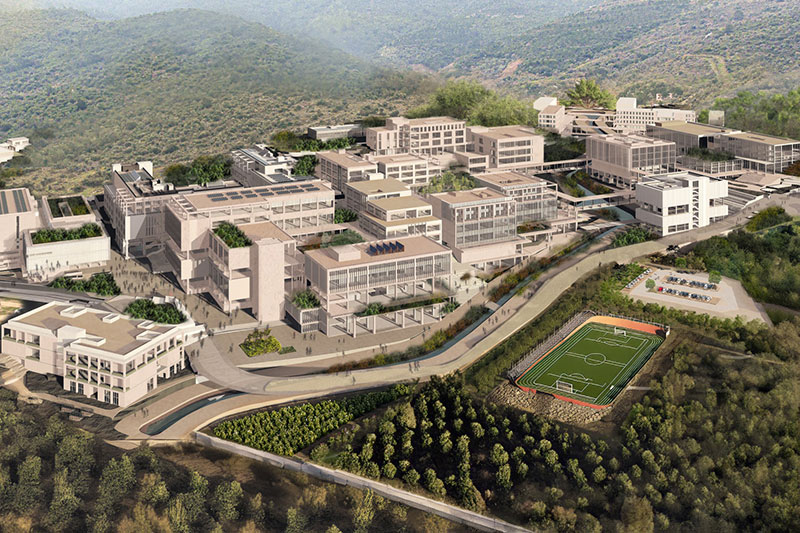
      IZMIR UNIVERSITY OF ECONOMICS GÜZELBAHÇE CAMPUS

      Details

      GLOBAL CAREER

      As Izmir University of Economics transforms into a world-class university, it also raises successful young people with global competence.

      More..

      CONTRIBUTION TO SCIENCE

      Izmir University of Economics produces qualified knowledge and competent technologies.

      More..

      VALUING PEOPLE

      Izmir University of Economics sees producing social benefit as its reason for existence.

      More..

      BENEFIT TO SOCIETY

      Transferring 22 years of power and experience to social work…

      More..
      You are one step ahead with your graduate education at Izmir University of Economics.
      Master Programs Doctorate Programs
      You are one step ahead with your graduate education at Izmir University of Economics.

      Master Programs Doctorate Programs
      Izmir University of Economics
      is an establishment of
      izto logo
      Izmir Chamber of Commerce Health and Education Foundation.
      ito vakfı logo
      Logo

      İzmir Ekonomi Üniversitesi
      Sakarya Caddesi No:156
      35330 Balçova - İzmir / TÜRKİYE

      kampus İzmir

      • University
      • LIFE at IUE
      • CAMPUS LIFE
      • UNIVERSITY IS LIVED IN IZMIR
      • PATENTS
      • CampusIzmir
      • STUDIOS AND LABORATORIES
      • Technology Transfer Office
      • Library
      • Career Guidance Centre
      • Children's University
      • Contact

      İEU © All rights reserved.

      İEU