

- University
- Academic
- Schools/Vocational Schools
- Vocational School of Justice
- Vocational School
- Vocational School
- Department of Banking and Insurance (Turkish)
- Department of Computer Programming (Turkish)
- Department of Foreign Trade (Turkish)
- Department of Graphic Design (Turkish)
- Department of Interior Design (Turkish)
- Department of Construction Technology (Turkish)
- Department of Occupational Health and Safety (Turkish)
- Department of Media and Communication (Turkish)
- Department of Architectural Restoration (Turkish)
- Department of Radio and Tv Programming (Turkish)
- Department of Civil Aviation Cabin Services (Turkish)
- Department of Civil Aviation Transportation Management (Turkish)
- Department of Tourism and Hotel Management (Turkish)
- Department of Applied English Translation
- Vocational School Of Health Services
- Vocational School Of Health Services
- Department of Child Development (Turkish)
- Department of Physiotherapy (Turkish)
- Department of Paramedic (Turkish)
- Department of Opticianry (Turkish)
- Department of Medical Documentation and Secreteriat (Turkish)
- Department of Medical Imaging Techniques (Turkish)
- Department of Medical Laboratory Techniques (Turkish)
- Department of Elderly Care (Turkish)
- School of Applied Management Sciences
- School of Foreign Languages
- Faculties
- Faculty of Arts and Sciences
- Faculty of Fine Arts and Design
- Faculty of Law
- Faculty of Communication
- Faculty of Business
- Faculty of Engineering
- Faculty of Engineering
- Department of Computer Engineering
- Department of Biomedical Engineering
- Department of Electrical and Electronics Engineering
- Department of Industrial Engineering
- Department of Food Engineering
- Department of Genetics and Bioengineering
- Department of Aerospace Engineering
- Department of Civil Engineering
- Department of Mechanical Engineering
- Department of Mechatronics Engineering
- Department of Software Engineering
- Faculty of Health Sciences
- Medicine
- Graduate School
- Common Courses
- Schools/Vocational Schools
- Research
- Research Centers
- Library
- Smart Campus
- Technology Transfer Office
- İzmir Sciencepark
- Continuous Education Center (EKOSEM)
- Children's University
- Ethics Committee
- Teaching and Learning Center (EKOEĞİTİM)
- Psychology Application and Research Center
- Researcher Training Coordinatorship
- Research Collaborations And Innovation Coordinatorship
- Campus
- INTERNATIONAL
- Contact
- 25TH YEAR
Department of Political Science and International Relations
PSIR 461 | Course Introduction and Application Information
| Course Name |
Politics of Memory
|
|
Code
|
Semester
|
Theory
(hour/week) |
Application/Lab
(hour/week) |
Local Credits
|
ECTS
|
|
PSIR 461
|
Fall/Spring
|
3
|
0
|
3
|
6
|
| Prerequisites |
None
|
|||||
| Course Language |
English
|
|||||
| Course Type |
Elective
|
|||||
| Course Level |
First Cycle
|
|||||
| Mode of Delivery | face to face | |||||
| Teaching Methods and Techniques of the Course | DiscussionGroup WorkLecture / Presentation | |||||
| National Occupation Classification | - | |||||
| Course Coordinator | ||||||
| Course Lecturer(s) | ||||||
| Assistant(s) | - | |||||
| Course Objectives | The purpose of this course is twofold. First, it aims to introduce students to concepts and theories about memory politics. Second, it aims to explore the problem of coming to terms with dark pasts that involve historical injustices as in the cases of crimes against humanity, genocide, Holocaust, totalitarianism, and colonialism. |
| Learning Outcomes |
The students who succeeded in this course;
|
| Course Description | This course is designed to introduce students to the field of memory studies and memory politics. Particular attention is paid to concepts and theories about public memory and coming to terms with dark pasts. It primarily focuses on contentious historical injustices and episodes such as the Holocaust, totalitarianism and colonialism as well as instances of crimes against humanity and genocide. Furthermore, it explores the links between, on the one hand, different forms of forgetting and remembrance, and, on the other, past wrongs, nation-building processes, and democratic politics. It aims to provide students with conceptual and theoretical tools for exploring how nations and communities officially and/or publicly come to terms with legacies of extreme violence. Additionally, it explores the role of civil society activism in transforming memory narratives as well as the literary and artistic interventions (such as novels, artworks, architectural projects and monuments) into public memory. Materials are drawn primarily from scholarly literature in the fields of memory studies and political theory, but relevant contributions of several disciplines in the social sciences and humanities are also included in the course reading list. Despite its primarily theoretical and conceptual focus, the course involves several cases as empirical illustrations of theoretical approaches to memory politics. |
| Related Sustainable Development Goals |
|
|
|
Core Courses | |
| Major Area Courses |
X
|
|
| Supportive Courses | ||
| Media and Management Skills Courses | ||
| Transferable Skill Courses |
WEEKLY SUBJECTS AND RELATED PREPARATION STUDIES
| Week | Subjects | Related Preparation |
| 1 | Culture of Remembrance and Its Political Significance | Jay Winter, “Remembrance as a Human Right”, Foreword in Memory and Political Change, Aleida Assmann and Linda Shortt (eds.) (Basingstoke: Palgrave, 2012), vii-xi. Duncan Bell, “Memory, Trauma and World Politics”, in Memory, Trauma and World Politics: Reflections on the Relationship between Past and Present, Duncan Bell (ed.) (Basingstoke: Palgrave, 2006), 1-29. |
| 2 | From Memory Boom to Memory Turn | Jay Winter, “Notes on the Memory Boom: War, Remembrance and the Uses of the Past”, in Memory, Trauma and World Politics: Reflections on the Relationship between Past and Present, Duncan Bell (ed.) (Basingstoke: Palgrave, 2006), 54-72. Pierre Nora, “Reasons for the Current Upsurge in Memory,” in The Collective Memory Reader, Jeffrey Olick, Vered Vinitzky-Seroussi, Daniel Levy (eds.) (Oxford: Oxford University Press, 2011) 437-441. Pierre Nora, “Between Memory and History: Les Lieux de Mémoire”, Representations 26 (1989): 7-24. |
| 3 | How do Nations Remember? | Anthony Smith, “The Resurgence of Nationalism? Myth and Memory in the Renewal of Nations”, British Journal of Sociology 47 (4) (1996): 575-598. Duncan Bell, “Mythscapes: Memory, Mythology, and National Identity”, British Journal of Sociology 54 (1) (2003): 63-81. |
| 4 | Forms of Forgetting | Paul Connerton, “Seven Types of Forgetting”, Memory Studies 1 (1) (2008): 59-71. Aleida Assmann, “Forms of Forgetting” PODCAST https://podcasts.ceu.edu/content/aleida-assmann-seven-ways-forgetting |
| 5 | European Memory | Presentations Aleida Assmann, “Dialogic Memory”, in Dialogue as a Transdisciplinary Concept, Paul Mendes-Flohr (ed.) (Berlin: De Gruyter, 2015), 199-214. Ann Rigney, “Transforming Memory and the European Project”, New Literary History 43 (2012): 607-628. |
| 6 | Political Responsibility | Presentations Iris M. Young, “Guilt versus Responsibility”, in Responsibility for Justice (Oxford: Oxford University Press, 2011), 75-93. Michael Rothberg, The Implicated Subject: Beyond Victims and Perpetrators (Stanford University Press, 2019), 1-58. |
| 7 | Witnessing | Discussion Week Primo Levi, “The Gray Zone”, The Drowned and the Saved, tr. Raymond Rosenthal (New York: Simon & Schuster, 1986), 25-56. Marc Nichanian, “Zabel Yesayan, Woman and Witness, or the Truth of the Mask”, New Perspectives on Turkey 42 (2010): 31-53. |
| 8 | MIDTERM | |
| 9 | Cosmopolitan Memory | Daniel Levy and Nathan Sznaider, “Memory Unbound: The Holocaust and the Formation of Cosmopolitan Memory”, European Journal of Social Theory, 5 (1) (2002): 87-106. |
| 10 | Site Visit and Applied Learning I | Site Visit: Izmir Jewish Heritage Project |
| 11 | Illiberal Memory & Documentary | Gavriel Rosenfeld, “The Rise of Illiberal Memory”, Memory Studies 16 (4) (2023): 709-723. Documentary: Köken Ergun, Şehitler (Heroes) |
| 12 | Site Visit and Applied Learning II | Site Visit: APİKAM & Buca Museum of Migration and Population Exchange |
| 13 | Agonistic Memory & War Museums Site Visit and Applied Learning III | Anna Cento Bull and Hans Lauge Hansen, “On Agonistic Memory”, Memory Studies 9 (4) (2016): 390-404. Stefan Berger, Anna Cento Bull, et al, “Memory Cultures of War in European War Museums”, Agonistic Memory and the Legacy of the 20th Century Wars in Europe, Stefan Berger & Wulf Kansteiner (eds.) (Cham: Palgrave Macmillan, 2021), 69-114. Site Visit: Manisa Liberation Museum |
| 14 | Memory Activism I | Yifat Gutman & Jenny Wüstenberg, “The Activist Turn in Memory Studies” in The Routledge Handbook of Memory Activism (London: Palgrave, 2023), 5-16. Aline Sierp, “Agency in Transnational Memory Politics: Guidelines for Inquiry”, Agency in Transnational Memory Politics, Jenny Wüstenberg & Aline Sierp (eds.) (New York: Berghah, 2020), 331-339. Interview: Hrant Dink Foundation, Nayat Karaköse & Ayşe Gül Altınay, “Ne 23 Nisan, ne de 24 Nisan, 23,5 Nisan’dır belki de o an” https://t24.com.tr/k24/yazi/ne-23-ne-de-24-nisan-23-5-nisan-dir-belki-de-o-an,2642 |
| 15 | Memory Activism II: Germany, Israel, and Turkey | Presentations Jenny Wüstenberg, “Building Negative Memory: Civic Initiatives for Memorials to Nazi Terror”, Civil Society and Memory in Postwar Germany (Cambridge: Cambridge University Press, 2017), 127-176. Aleida Assmann, “One Land and Three Narratives: Palestinian Sites of Memory in Israel”, Memory Studies 11 (3) (2018): 287-300. Emre Gönlügür and Devrim Sezer, “Therapeutic Forgetting, Agonistic Remembrance: Conflicting Memories of Izmir’s Kültürpark and Contested Narratives in Contemporary Turkey”, Memory Studies 14 (2) (2021): 395-421. Onur Bakiner, “Truth, Justice, and Commemoration Initiatives in Turkey”, The Oxford Handbook of Turkish Studies, Güneş Murat Tezcür (ed.) (Oxford: Oxford University Press, 2022), 1-22. |
| 16 | Final Exam |
| Course Notes/Textbooks | Aleida Assmann and Linda Shortt (eds.), Memory and Political Change (Basingstoke: Palgrave, 2012), ISBN: 978-0230302006.
Duncan Bell (ed.) Memory, Trauma and World Politics (Basinstoke: Palgrave, 2006), ISBN: 978-0230006560.
Pierre Nora, “Reasons for the Current Upsurge in Memory,” in The Collective Memory Reader, Jeffrey Olick, Vered Vinitzky-Seroussi, Daniel Levy (eds.) (Oxford: Oxford University Press, 2011) 437-441.
Pierre Nora, “Between Memory and History: Les Lieux de Mémoire”, Representations 26 (1989): 7-24.
Paul Mendes-Flohr (ed.), Dialogue as a Transdisciplinary Concept (Berlin: De Gruyter, 2015), ISBN: 9783110379150.
Jeffrey Olick, Vered Vinitzky-Seroussi, Daniel Levy (eds.), The Collective Memory Reader (Oxford: Oxford University Press, 2011), ISBN: 978-0195337426.
Anthony Smith, “The Resurgence of Nationalism? Myth and Memory in the Renewal of Nations”, British Journal of Sociology 47 (4) (1996): 575-598.
Dundan Bell, “Mythscapes: Memory, Mythology, and National Identity”, British Journal of Sociology 54 (1) (2003): 63-81. Jan-Werner Müller, Memory and Power in Post-War Europe (Cambridge: Cambridge University Press, 2002), ISBN: 978-0521806107.
Paul Connerton, “Seven Types of Forgetting”, Memory Studies 1 (1) (2008): 59-71.
Aleida Assmann, “Forms of Forgetting” PODCAST https://podcasts.ceu.edu/content/aleida-assmann-seven-ways-forgetting
Ann Rigney, “Transforming Memory and the European Project”, New Literary History 43 (2012): 607-628.
Iris M. Young, Responsibility for Justice (Oxford: Oxford University Press, 2011), ISBN: 9780195392388.
Michael Rothberg, The Implicated Subject: Beyond Victims and Perpetrators (Stanford University Press, 2019), ISBN: 9781503609600.
Primo Levi, “The Gray Zone”, The Drowned and the Saved, tr. Raymond Rosenthal (New York: Simon & Schuster, 1986).
Marc Nichanian, “Zabel Yesayan, Woman and Witness, or the Truth of the Mask”, New Perspectives on Turkey 42 (2010): 31-53.
Daniel Levy and Nathan Sznaider, “Memory Unbound: The Holocaust and the Formation of Cosmopolitan Memory”, European Journal of Social Theory, 5 (1) (2002): 87-106.
Gavriel Rosenfeld, “The Rise of Illiberal Memory”, Memory Studies 16 (4) (2023): 709-723.
Anna Cento Bull and Hans Lauge Hansen, “On Agonistic Memory”, Memory Studies 9 (4) (2016): 390-404.
Stefan Berger & Wulf Kansteiner (eds.) Agonistic Memory and the Legacy of the 20th Century Wars in Europe, Cham: Palgrave Macmillan, 2021), 69-114. 978-3-030-86054-7
Yifat Gutman & Jenny Wüstenberg, “The Activist Turn in Memory Studies” in The Routledge Handbook of Memory Activism (London: Palgrave, 2023), 5-16. ISBN: 978-0-367-65039-1
Aline Sierp, “Agency in Transnational Memory Politics: Guidelines for Inquiry”, Agency in Transnational Memory Politics, Jenny Wüstenberg & Aline Sierp (eds.) (New York: Berghah, 2020), 331-339. ISBN 978-1-78920-694-4
Güneş Murat Tezcür (ed.) The Oxford Handbook of Turkish Studies (Oxford: Oxford University Press, 2022), ISBN: 9780190064891.
Jenny Wüstenberg, Civil Society and Memory in Postwar Germany (Cambridge: Cambridge University Press, 2017), ISBN: 9781107177468. |
| Suggested Readings/Materials |
EVALUATION SYSTEM
| Semester Activities | Number | Weigthing |
| Participation |
1
|
10
|
| Laboratory / Application | ||
| Field Work | ||
| Quizzes / Studio Critiques | ||
| Portfolio | ||
| Homework / Assignments | ||
| Presentation / Jury |
1
|
30
|
| Project | ||
| Seminar / Workshop | ||
| Oral Exams | ||
| Midterm |
1
|
30
|
| Final Exam |
30
|
|
| Total |
| Weighting of Semester Activities on the Final Grade |
3
|
70
|
| Weighting of End-of-Semester Activities on the Final Grade |
1
|
30
|
| Total |
ECTS / WORKLOAD TABLE
| Semester Activities | Number | Duration (Hours) | Workload |
|---|---|---|---|
| Theoretical Course Hours (Including exam week: 16 x total hours) |
16
|
0
|
|
| Laboratory / Application Hours |
16
|
0
|
|
| Study Hours Out of Class |
12
|
3
|
36
|
| Field Work |
0
|
||
| Quizzes / Studio Critiques |
0
|
||
| Portfolio |
0
|
||
| Homework / Assignments |
0
|
||
| Presentation / Jury |
1
|
25
|
25
|
| Project |
0
|
||
| Seminar / Workshop |
0
|
||
| Oral Exam |
0
|
||
| Midterms |
1
|
20
|
20
|
| Final Exam |
40
|
0
|
|
| Total |
81
|
COURSE LEARNING OUTCOMES AND PROGRAM QUALIFICATIONS RELATIONSHIP
|
#
|
Program Competencies/Outcomes |
* Contribution Level
|
|||||
|
1
|
2
|
3
|
4
|
5
|
|||
| 1 |
To be able to use the theoretical and practical knowledge acquired in the areas of Political Science and International Relations. |
-
|
-
|
-
|
X
|
-
|
|
| 2 |
To be able to have the basic knowledge of, and make use of other disciplines which contribute to the areas of Political Science and International Relations. |
X
|
-
|
-
|
-
|
-
|
|
| 3 |
To be able to distinguish the differences between classical and contemporary theories and to assess their relationship. |
-
|
-
|
-
|
-
|
-
|
|
| 4 |
To be able to recognize regional and global issues, and develop sustainable solutions based on research. |
-
|
X
|
-
|
-
|
-
|
|
| 5 |
To be able to assess the acquired knowledge and skills in the areas of Political Science and International Relations critically. |
-
|
-
|
-
|
-
|
X
|
|
| 6 |
To be able to transfer ideas and proposals on issues in the areas of Political Science and International Relations to other people and institutions verbally and in writing. |
X
|
-
|
-
|
-
|
-
|
|
| 7 |
To be able to identify the historical continuity and changes observed in the relations between the actors and institutions of national and international politics. |
-
|
-
|
-
|
-
|
-
|
|
| 8 |
To be able to examine concepts, theories, and developments with scientific methods in the areas of Political Science and International Relations. |
-
|
-
|
-
|
-
|
-
|
|
| 9 |
To be able to take responsibility as an individual and as a team member. |
-
|
X
|
-
|
-
|
-
|
|
| 10 |
To be able to act in accordance with the scientific and ethical values in studies related to Political Science and International Relations. |
-
|
-
|
-
|
-
|
-
|
|
| 11 |
To be able to collect data in the areas of Political Science and International Relations and communicate with colleagues in a foreign language ("European Language Portfolio Global Scale", Level B1). |
-
|
-
|
-
|
-
|
-
|
|
| 12 |
To be able to speak a second foreign language at a medium level of fluency efficiently. |
-
|
-
|
-
|
-
|
-
|
|
| 13 |
To be able to relate the knowledge accumulated throughout human history to their field of experience. |
-
|
-
|
-
|
-
|
-
|
|
*1 Lowest, 2 Low, 3 Average, 4 High, 5 Highest
NEWSALL NEWS


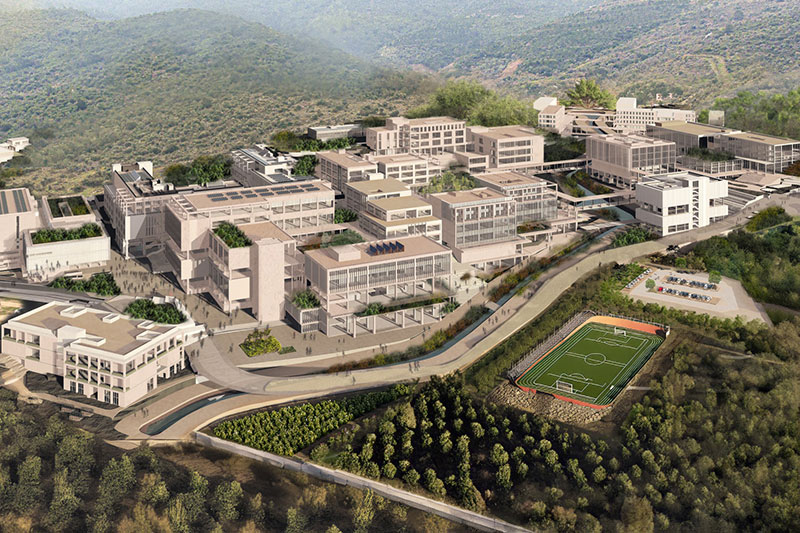
IZMIR UNIVERSITY OF ECONOMICS GÜZELBAHÇE CAMPUS
DetailsGLOBAL CAREER
As Izmir University of Economics transforms into a world-class university, it also raises successful young people with global competence.
More..CONTRIBUTION TO SCIENCE
Izmir University of Economics produces qualified knowledge and competent technologies.
More..VALUING PEOPLE
Izmir University of Economics sees producing social benefit as its reason for existence.
More..
You are one step ahead with your graduate education at Izmir University of Economics.